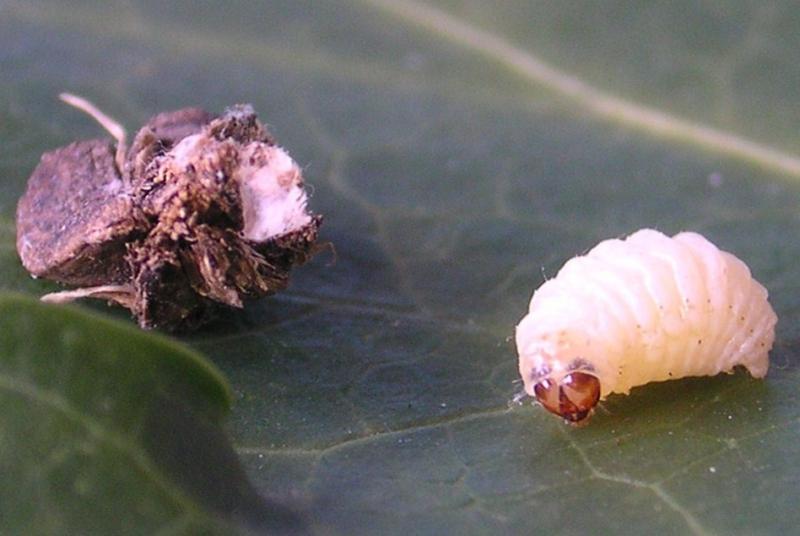
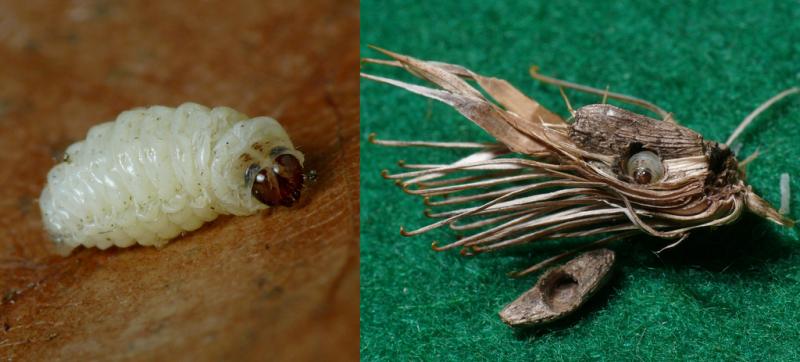
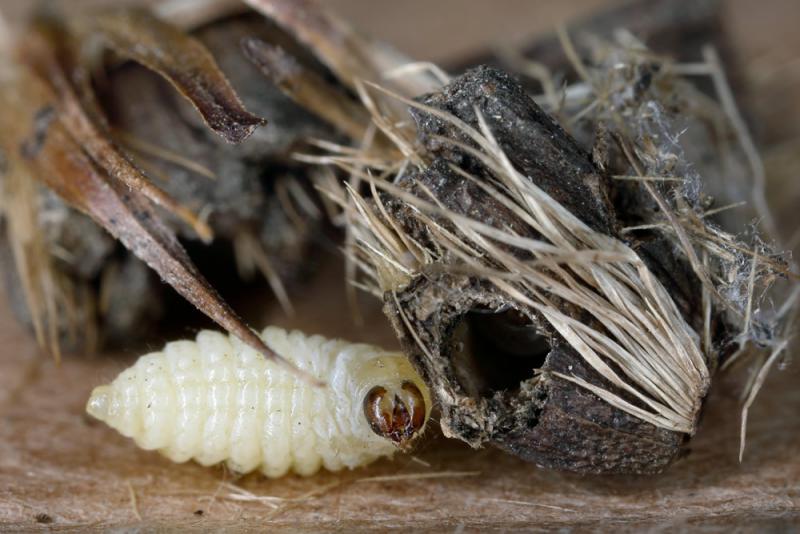
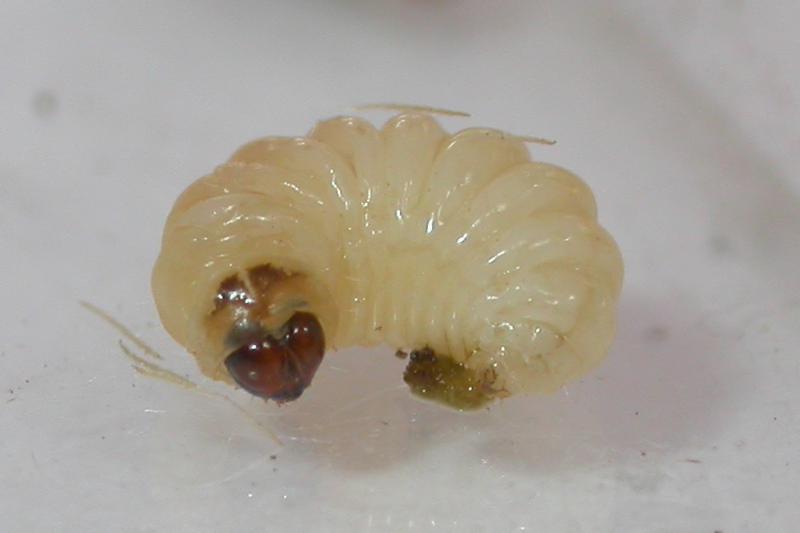
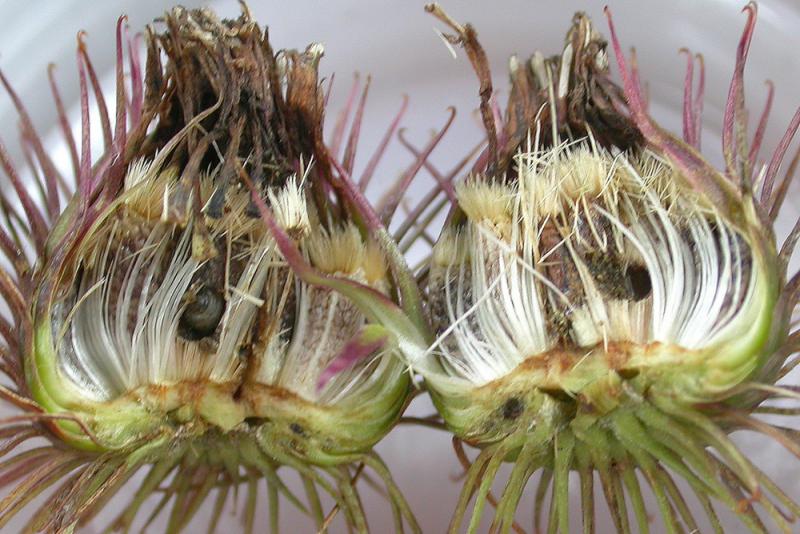
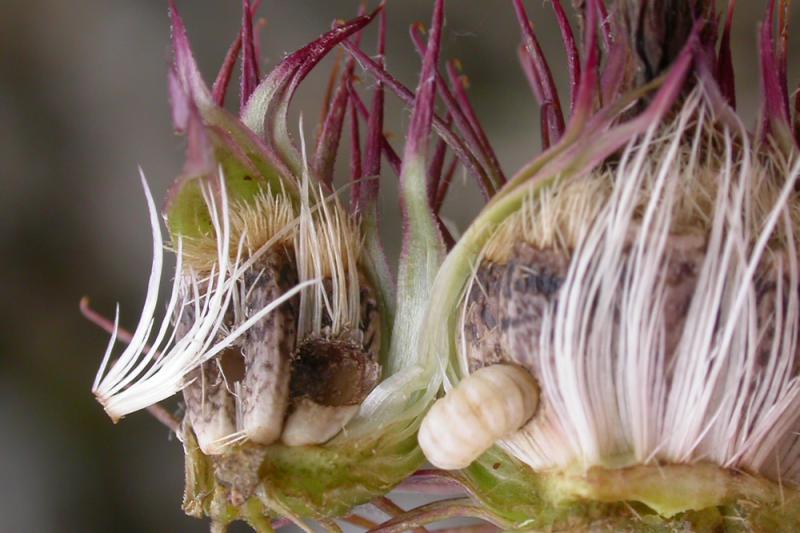
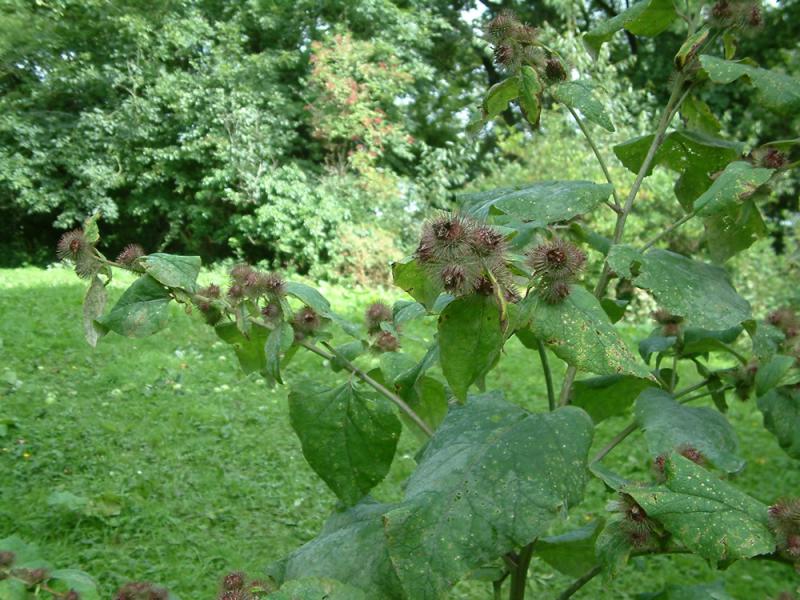
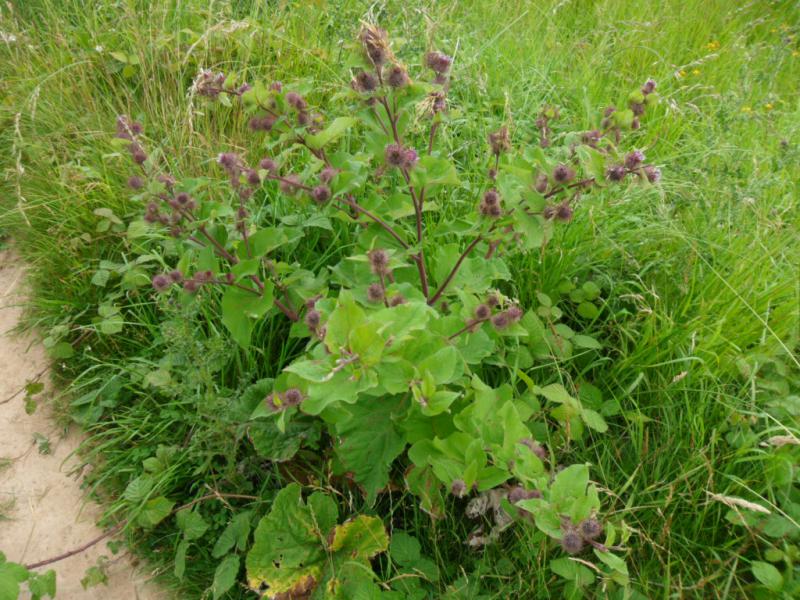
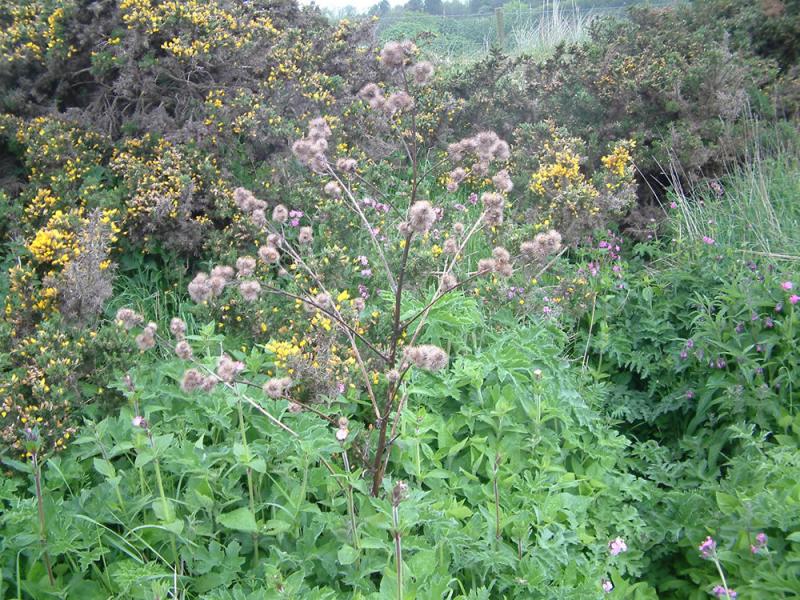
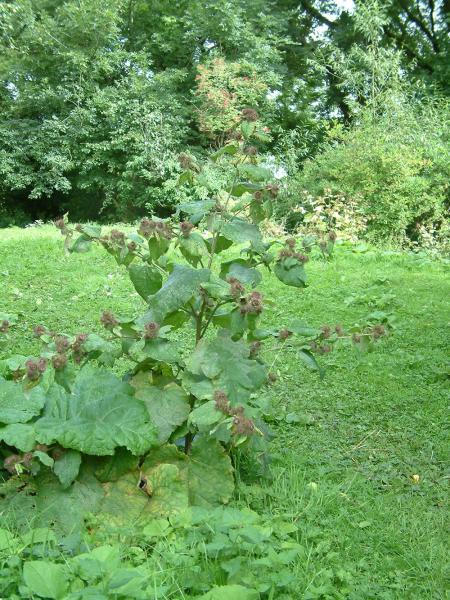
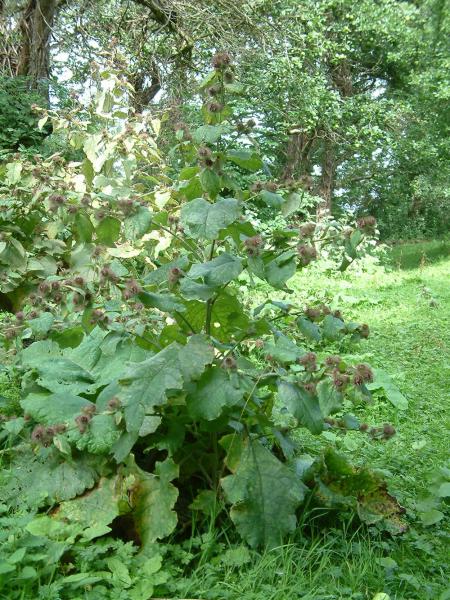
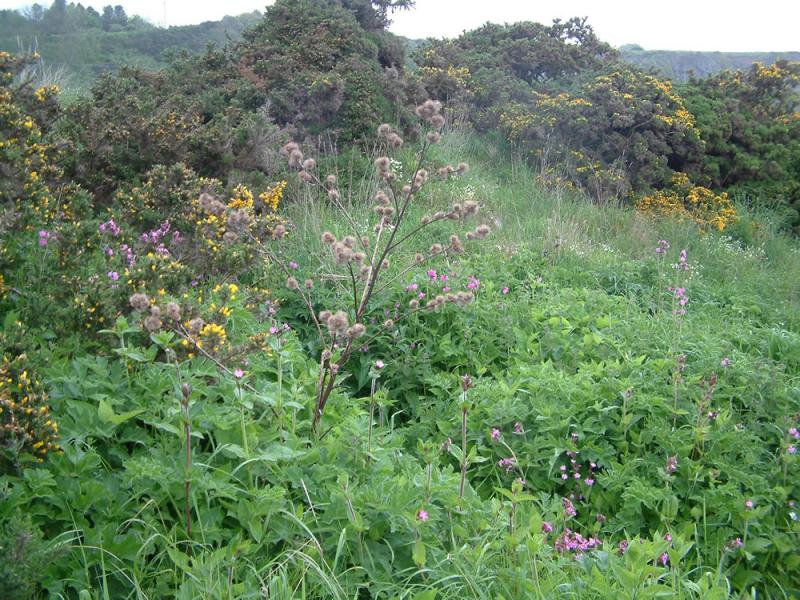
Larva: in the seed-heads from August, overwintering until pupation in May. Overwintered seed-heads may, on occasions, produce large numbers of adults.
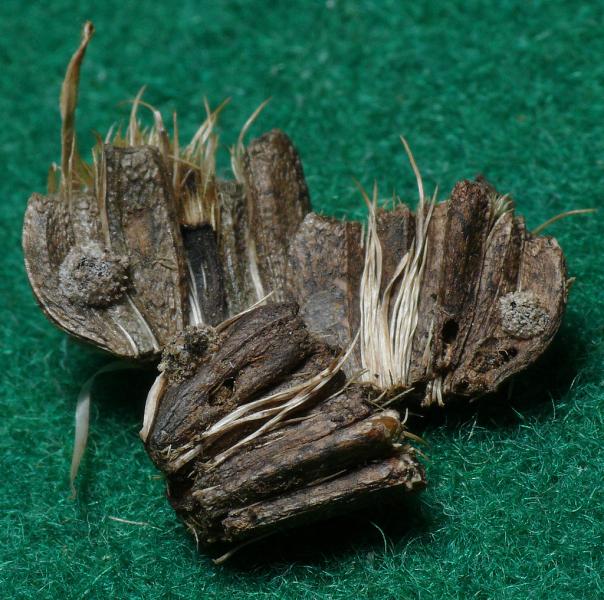
The pupal cocoons look like those of the fly, Tephritis bardanae, which are often embedded in a hard matrix of debris, but the fly pupal cases separate into individual items when the seed head is opened. The adults of the fly emerge in autumn so later pupal cases will be empty unless containing a parasite. M. lappella larva make a feeding chamber and hibernaculum from the seeds which consists of four to seven seeds cemented together in a rough semi-circle, the surrounding seeds falling away when the seedhead is opened. From late summer to late spring forcing these cemented seeds apart will reveal a white larva, unless it is parasitised, and if this is only partially opened the larva will spin up the gaps and continue with its overwintering. They eventually pupate within the hibernaculum, the adult emerging from one end through an exit created and then partially closed by the larva.
The information above on the larval hibernaculum has been kindly provided by Malcolm Jennings, pers. comm.
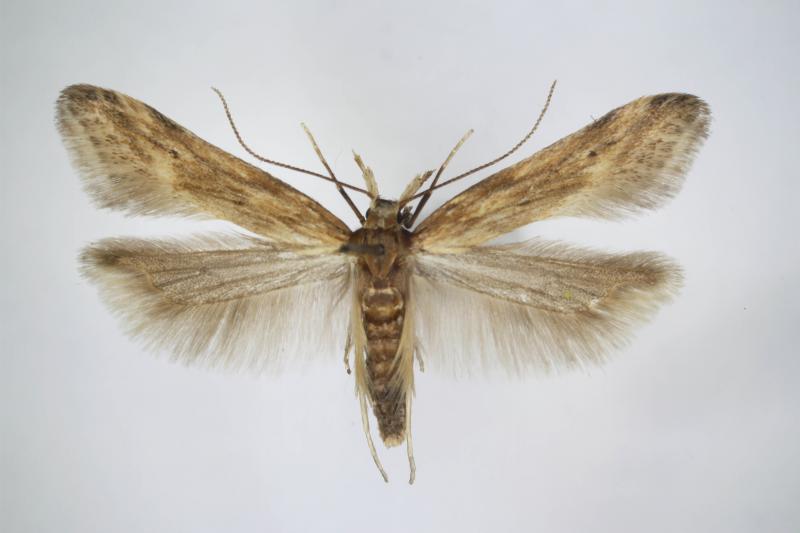
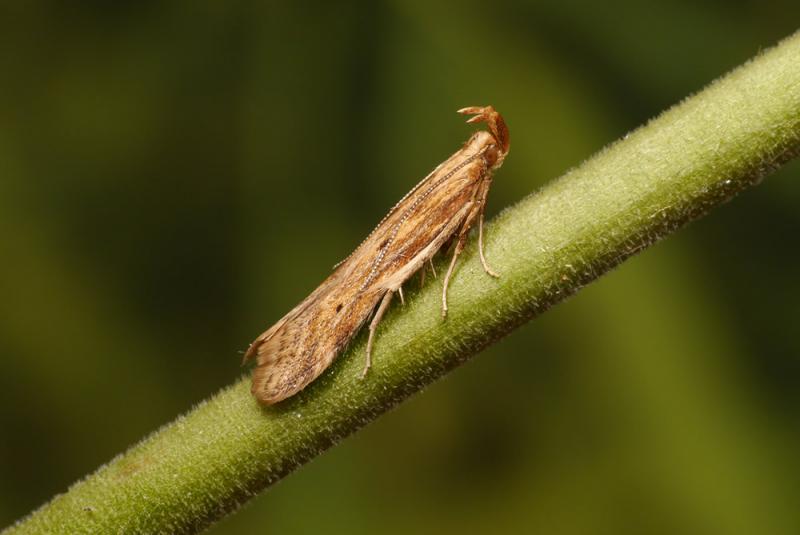
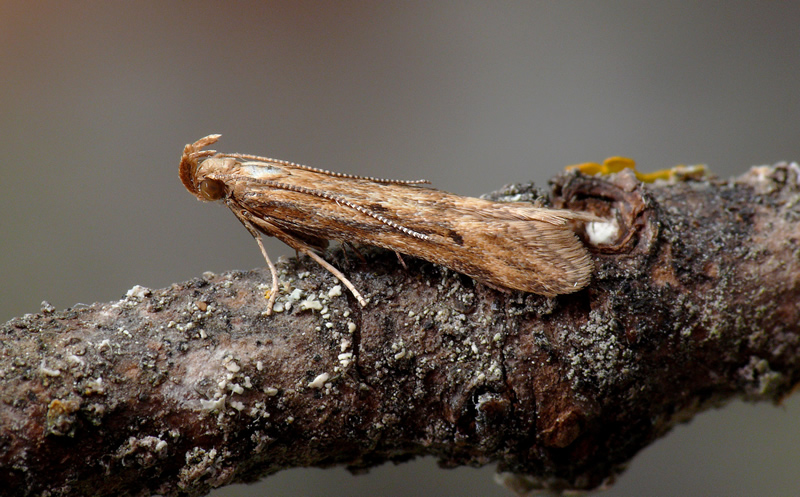
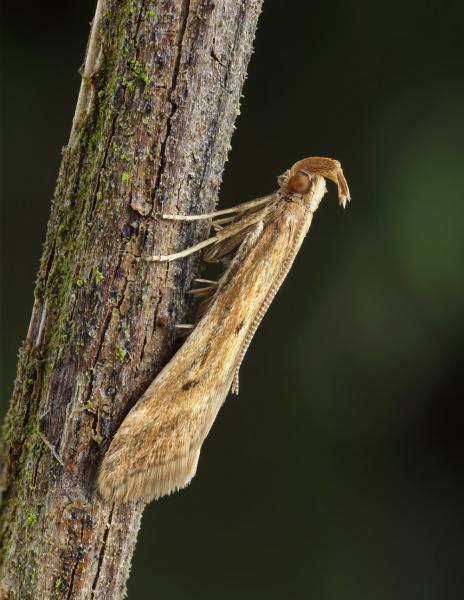
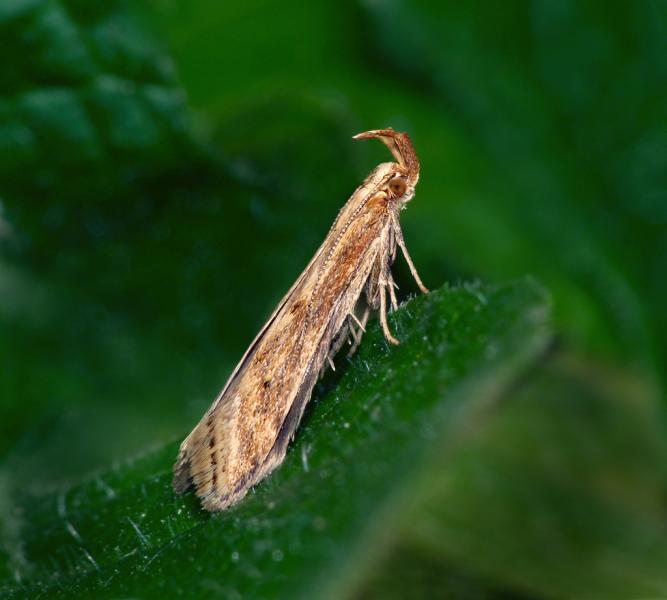
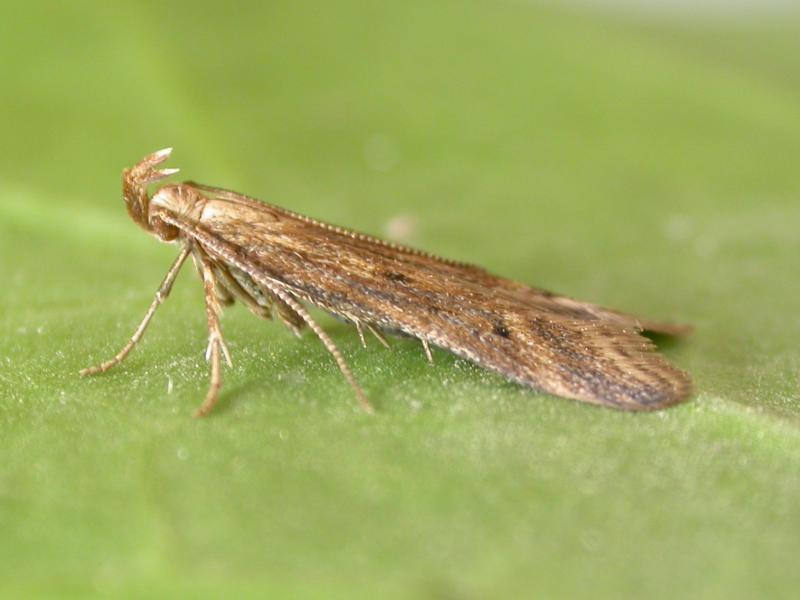
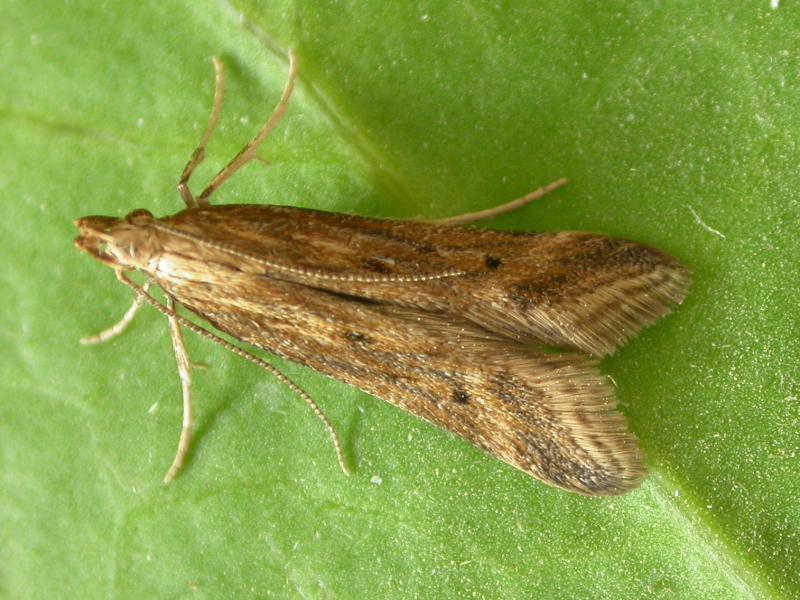
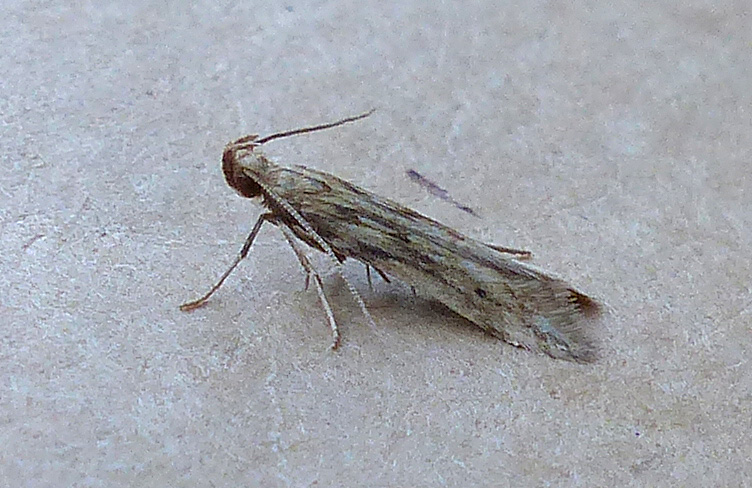
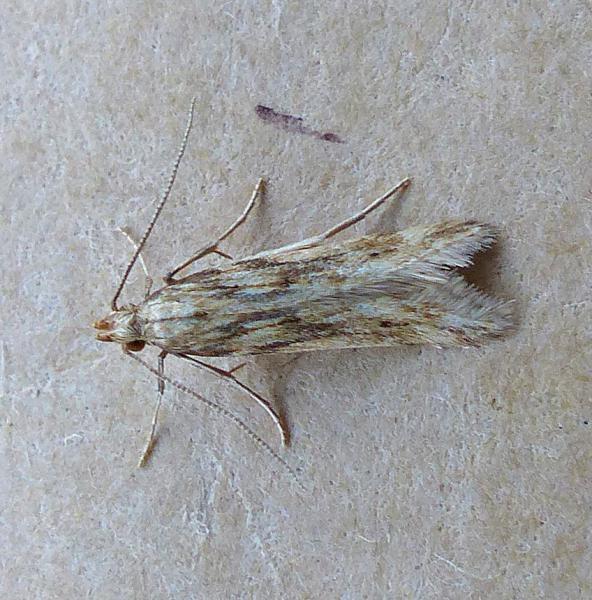
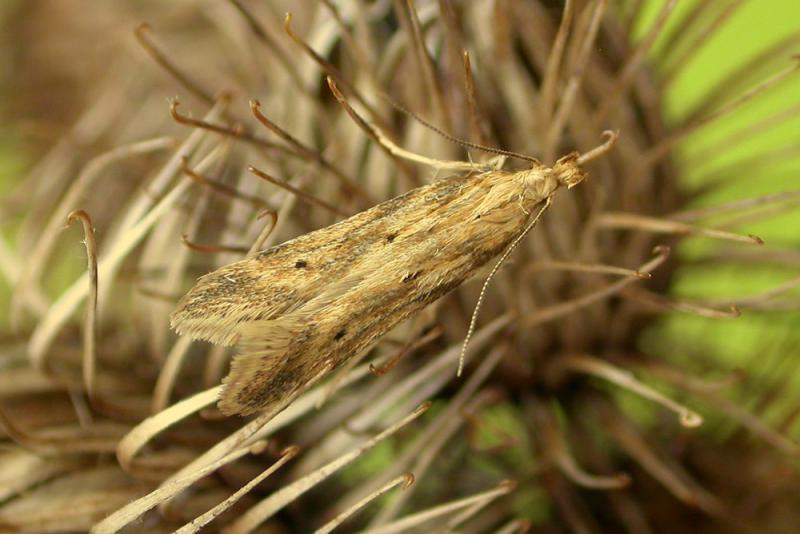
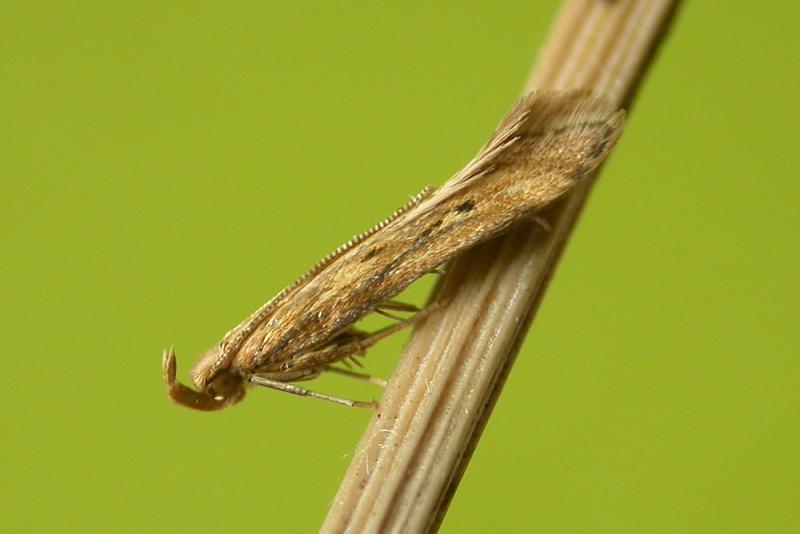
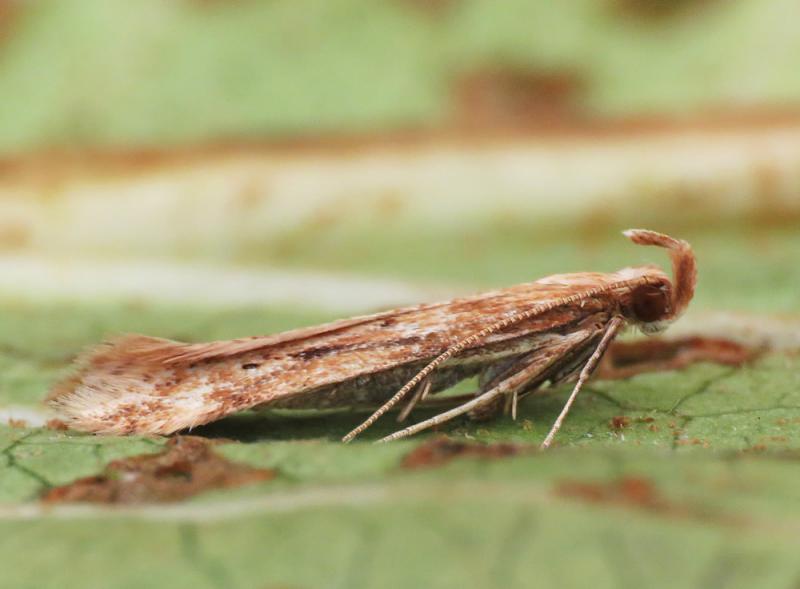
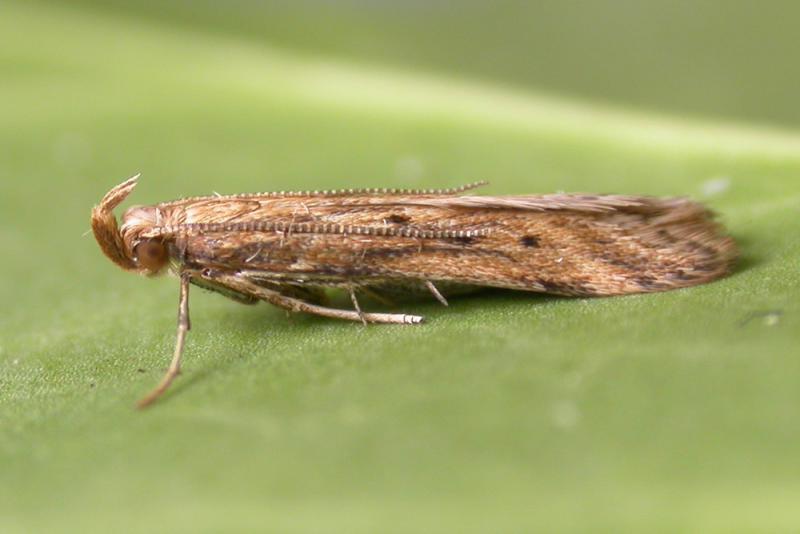
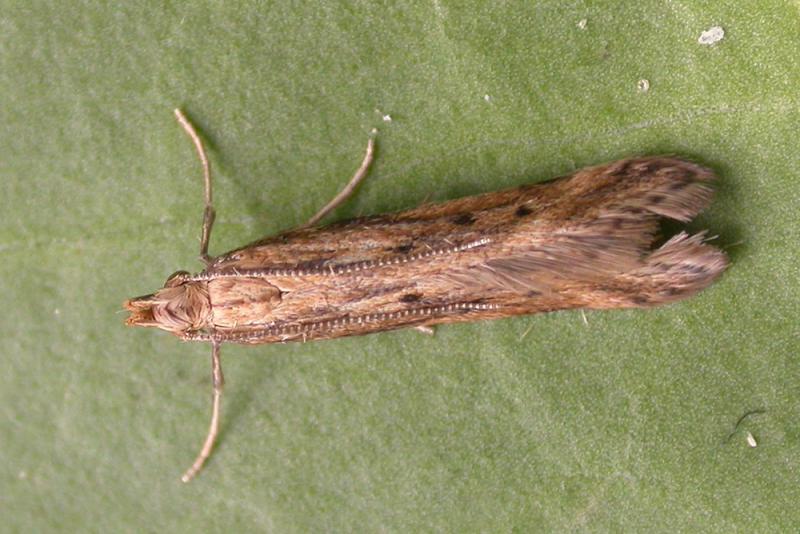
Adult: can sometimes be disturbed from around the foodplant, flies at night and comes to light.

.jpg)