This species bears only a superficial resemblance to the following but care should be taken to exclude these species if the specimen is particularly pale or worn, when dissection would be recommended.
Caryocolum blandulellais smaller (8.5-11mm wingspan as opposed to 9.5-14.5mm in C. blandella), lacks a distinct row of terminal spots, has a more regular black costal block which normally avoids overlapping the first black spot in the middle of the forewings. This species appears to be restricted to a few sand dunes in south-east England and south-west Wales.
Caryocolum blandelloides is generally smaller at 10-12mm wingspan but with quite a lot of overlap, shows less contrast in the markings, the black patch on the costa is half as wide and the antennae are less distinctly ringed with light and dark. The habitat and distribution of C. blandelloides (large coastal dunes in northern Scotland) should also exclude any chance of confusion.
C. proxima is generally smaller with a wingspan of 9-11.5mm and has the light rings on the tibia of the forelegs and mid-legs with light red scales. Confusion is only likely with paler or particularly worn specimens of this species.
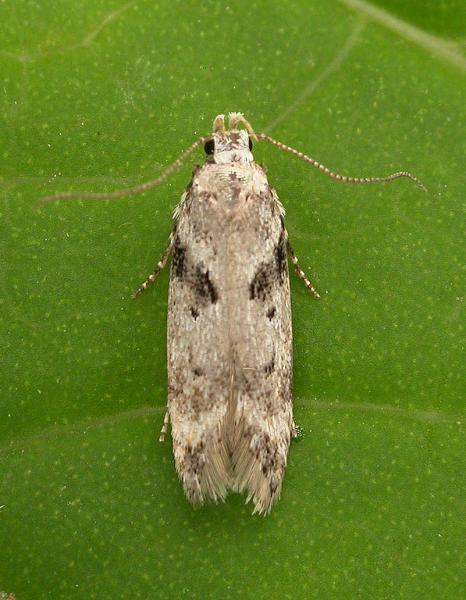
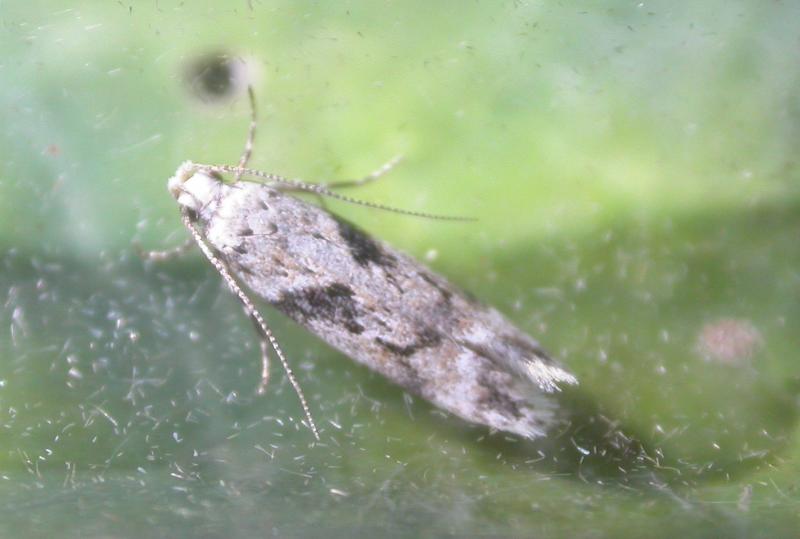
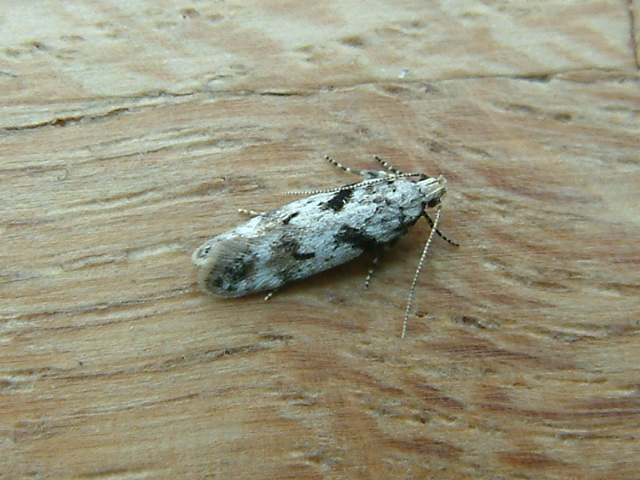
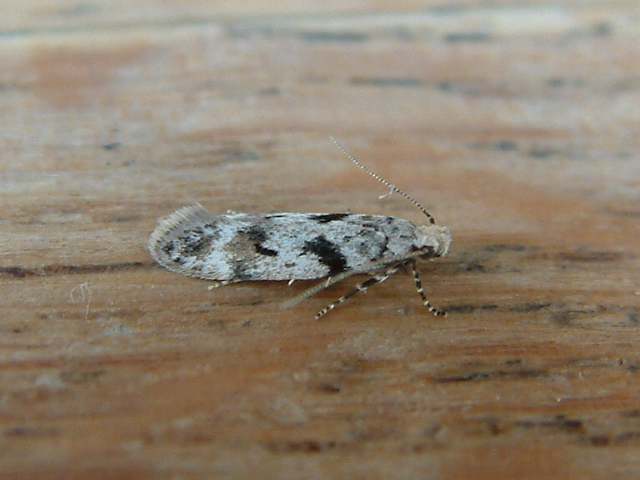
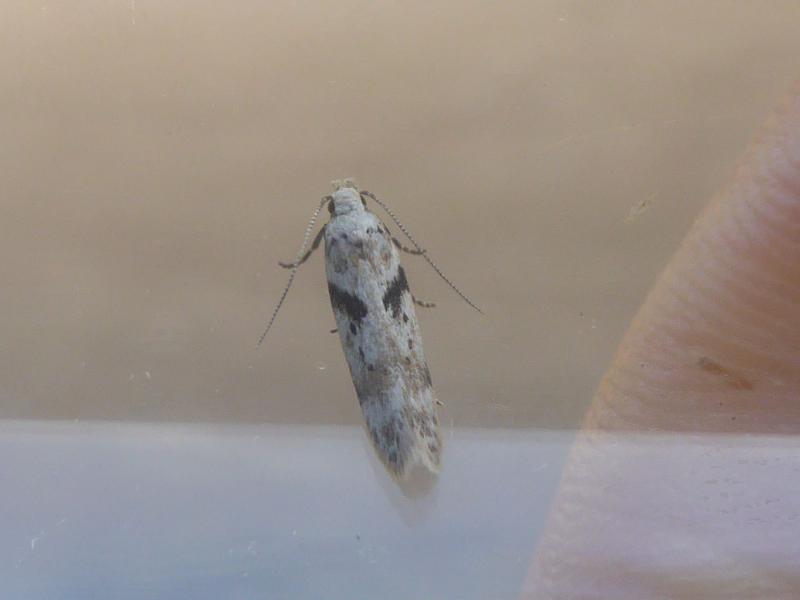
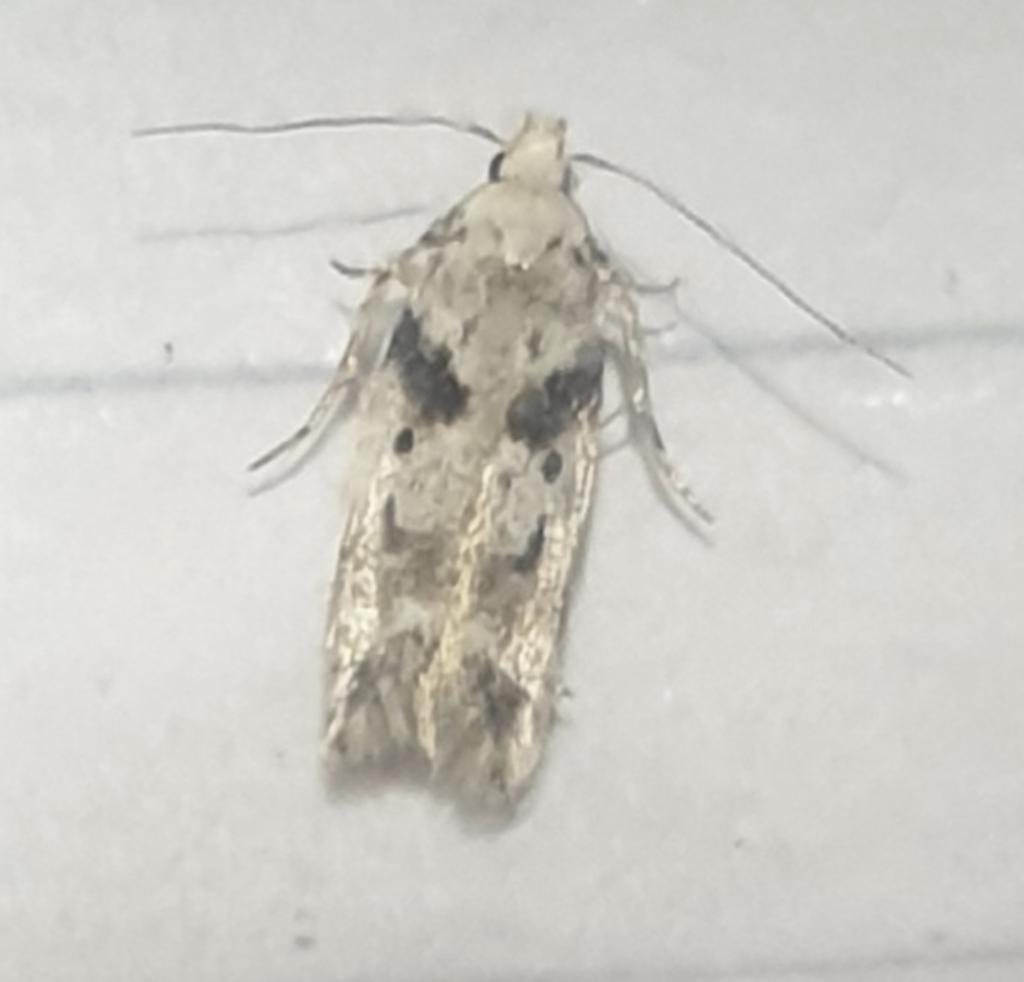
In comparison to C. huebneri and C. kroesmanniella, C. blandella lacks the fuscous-tipped scales present on the head and thorax and has the costal and plical spots obscured by the dark fuscous bar. C. kroesmanniella is generally of similar size to C. blandella but has less strongly contrasting markings and has an obvious break in the black streak at one quarter on the forewing.

.JPG)