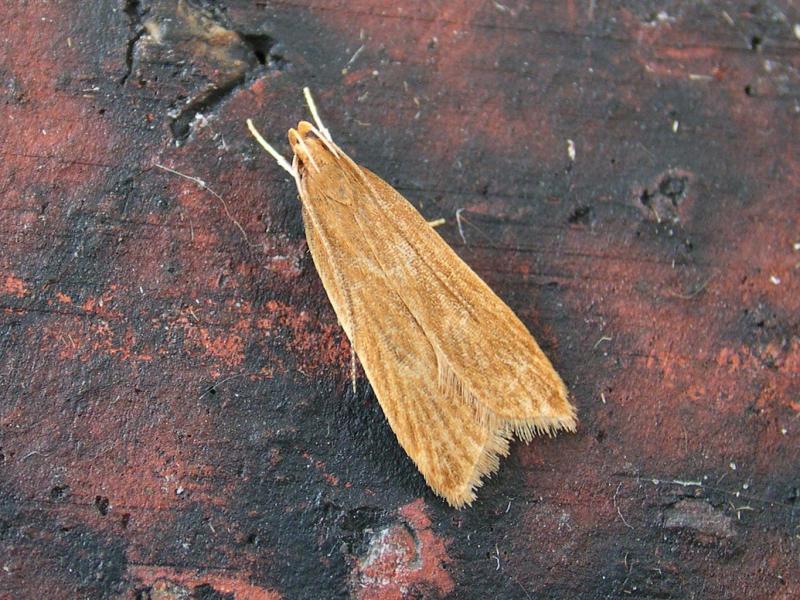
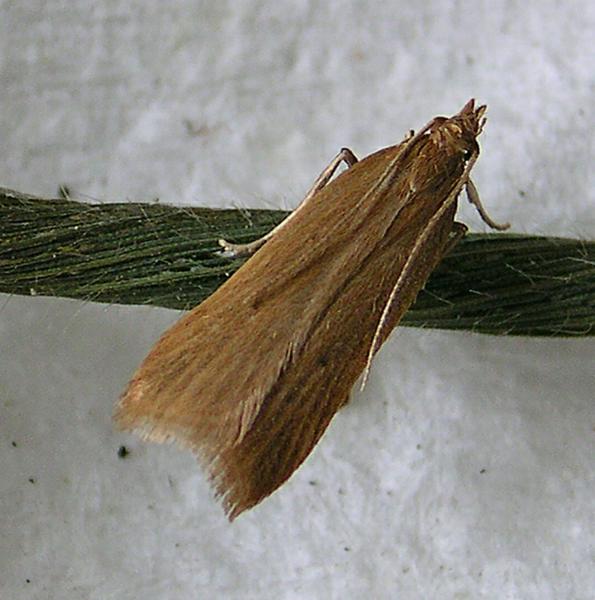
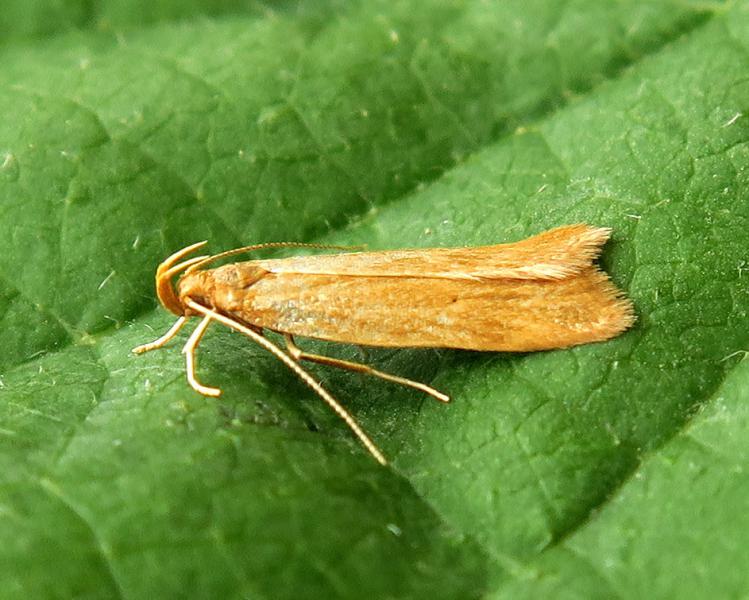
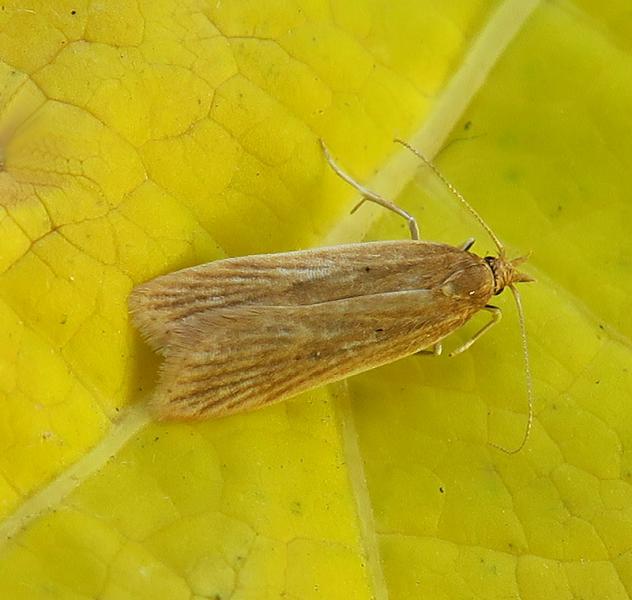
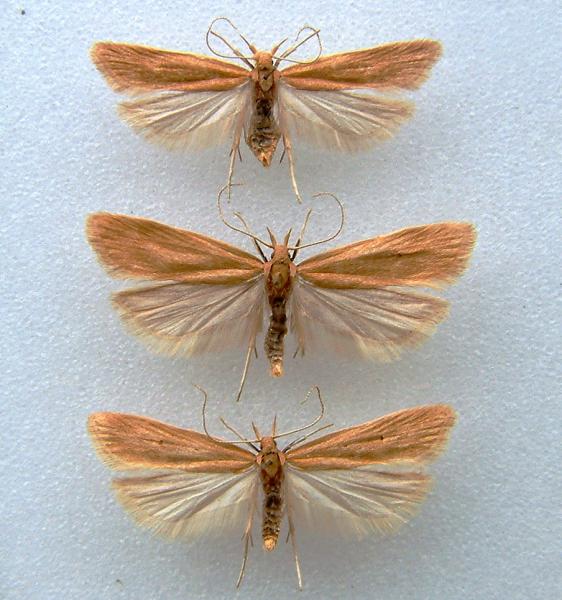
In the past, the separation of this species from H. lutatella was based on the presence or absence of blackish stigmata on the forewing. This was proved to be unreliable by Heckford and Sterling (1999) and subsequent examination of Museum specimens from various localities demonstrate that some H. rufescens can have between one to three dark brown scales in the middle of the forewing at one-third and two-thirds.
Heckford and Sterling gave the key identification features as follows:
H. lutatella - the forewings are grey-brown to brown coloured and lack the ochreous coloured veins of H. rufescens. The labial palps are white above and below (without brown scales) and the hindwing of the female pale to dark grey.
In H. rufescens the forewing is ochreous (or veins ochreous with brown scaling), the outer margins of the labial palpus has brown scales and the hindwing of the female is whitish.
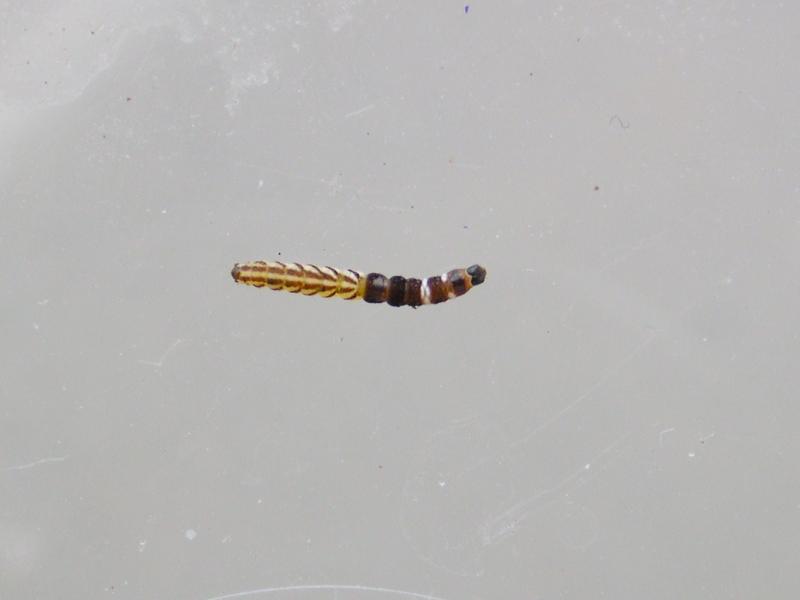
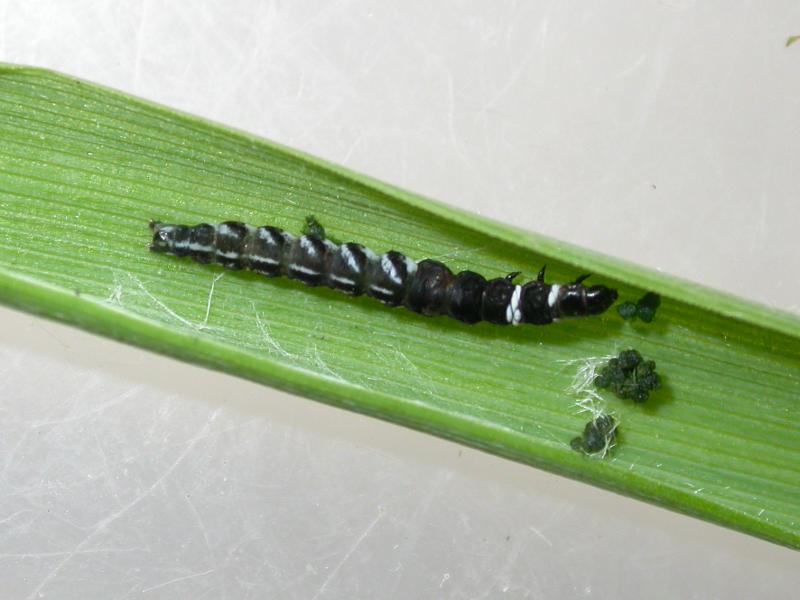
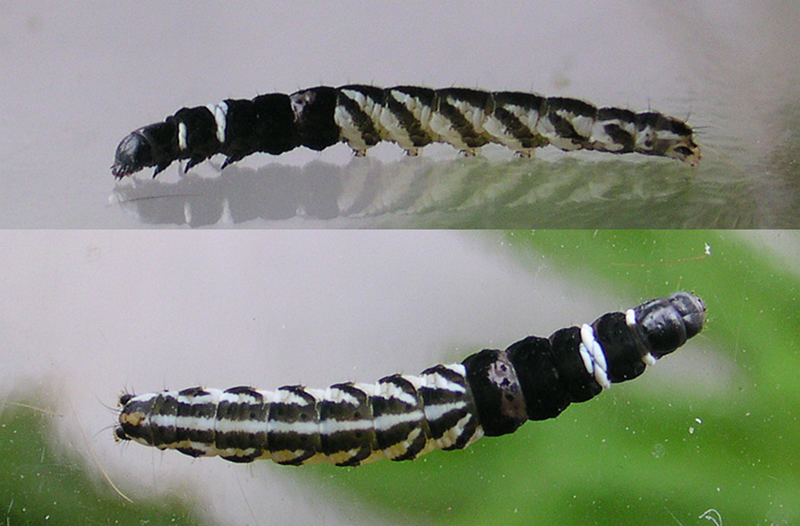
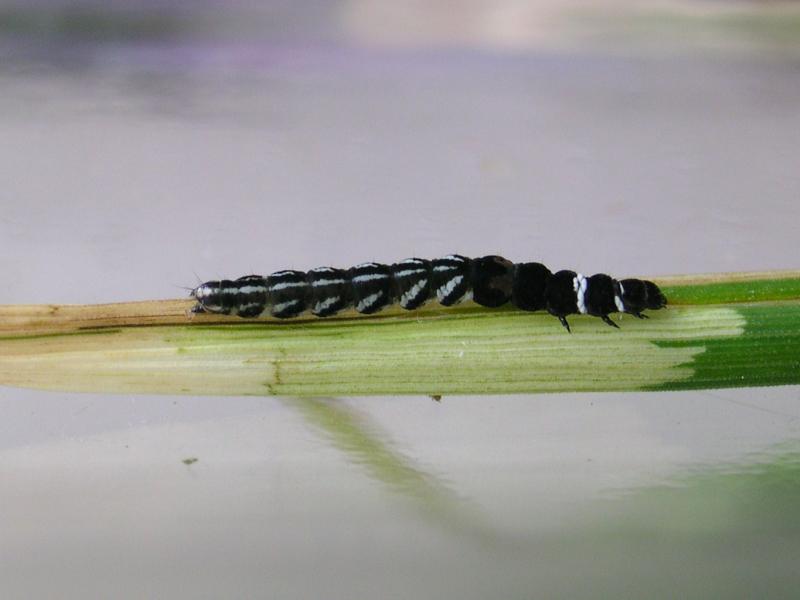
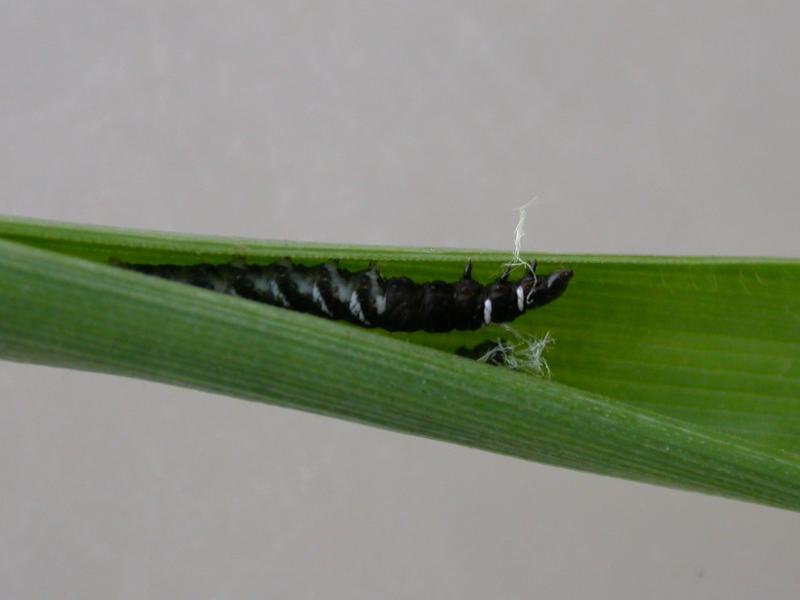
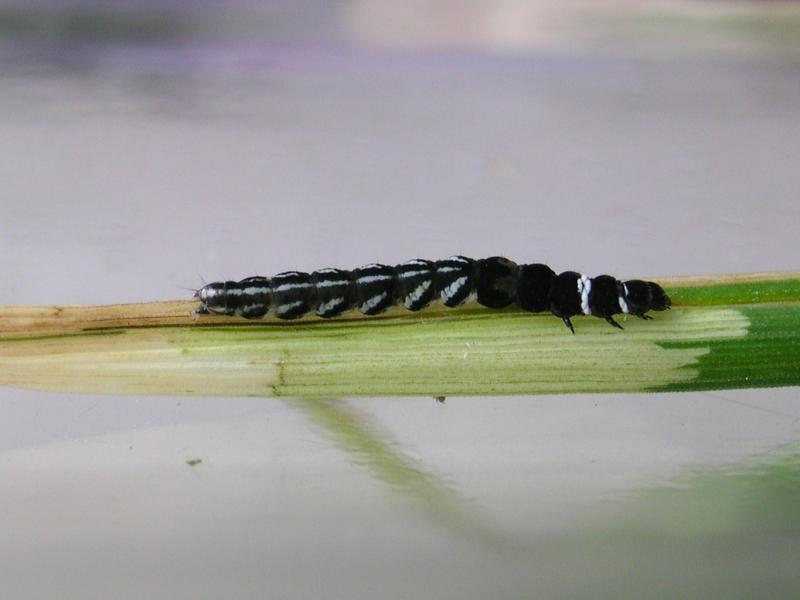
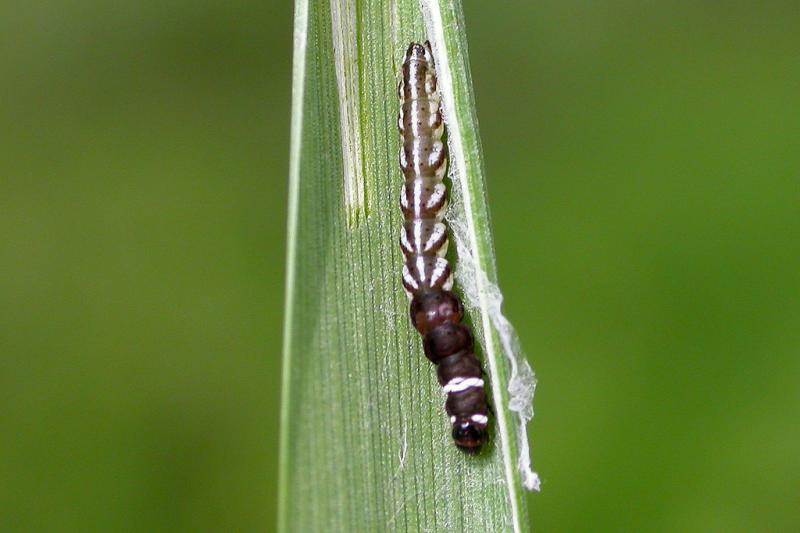
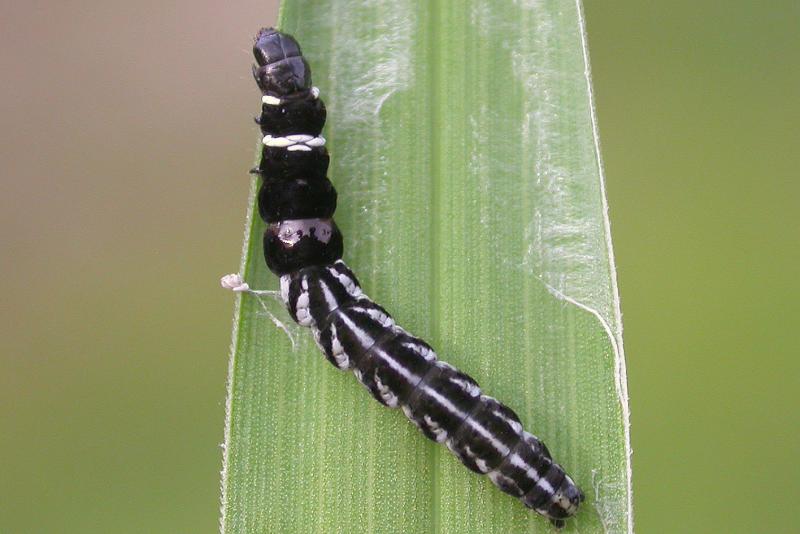
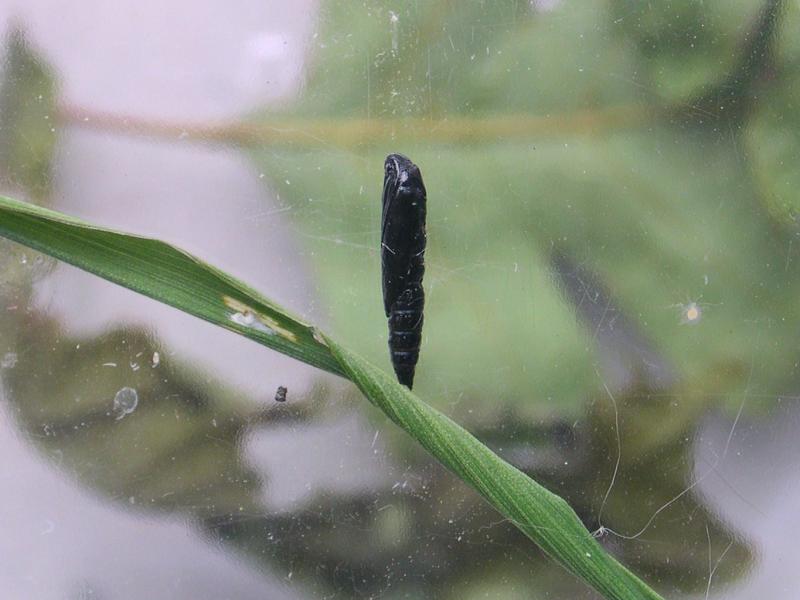
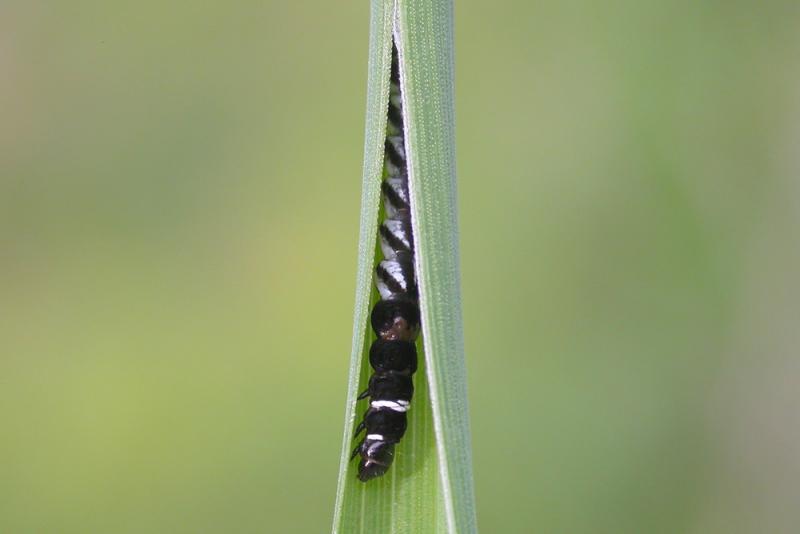
Separating the larva of these two species is more readily achieved in early instars. In H. lutatella, the abdominal segments one and two are black with a reddish or reddish brown sclerotized plate on each anteriorly, smaller on segment one, confined to the dorsum and rounded with small lateral extensions. In H. rufescens, these two segments are black with the sclerotized plates dark olive (early instar) becoming pale brown in later instars. The plate on segment one is very small consisting of a narrow, linear band, hardly broadening about the dorsum.
Microscopic examination of small, pale, worn specimens is recommended in extreme southern coastal areas where the shape of the sclerite of tergite 1 and 2 in both sexes are distinctly horse-shoe shaped in H. rufescens and boomerang shaped in H. lutatella (see link to the genitalia in the Images section above). Only differences in the female genitalia are of any practical use in separating the two species (Heckford and Sterling, 1999, full reference in the Publications: Published Papers section of this site).