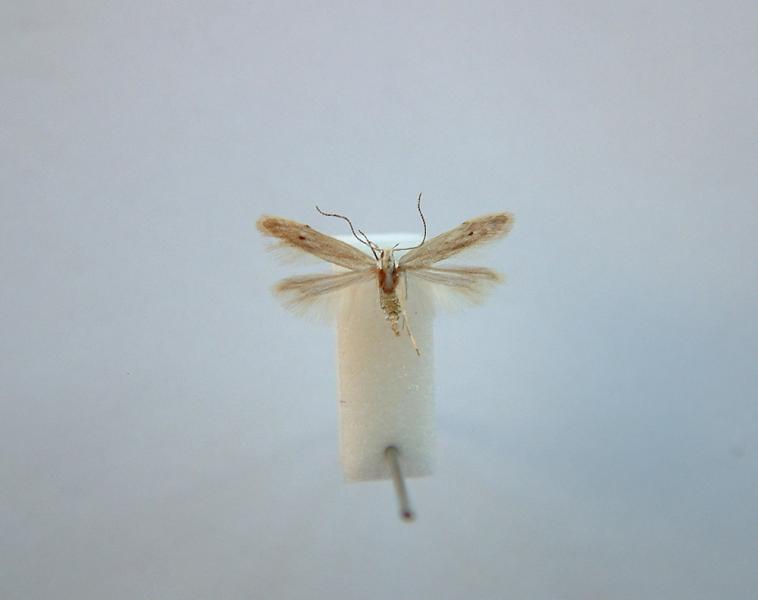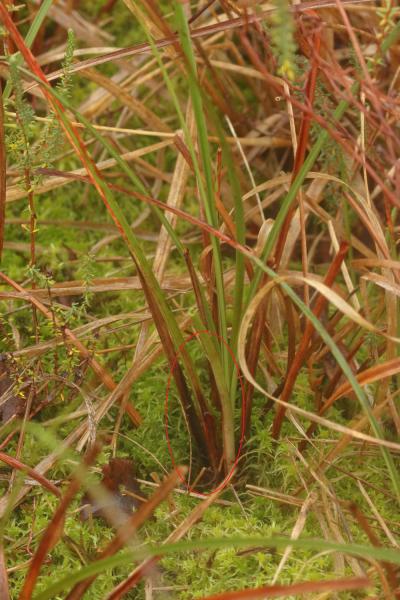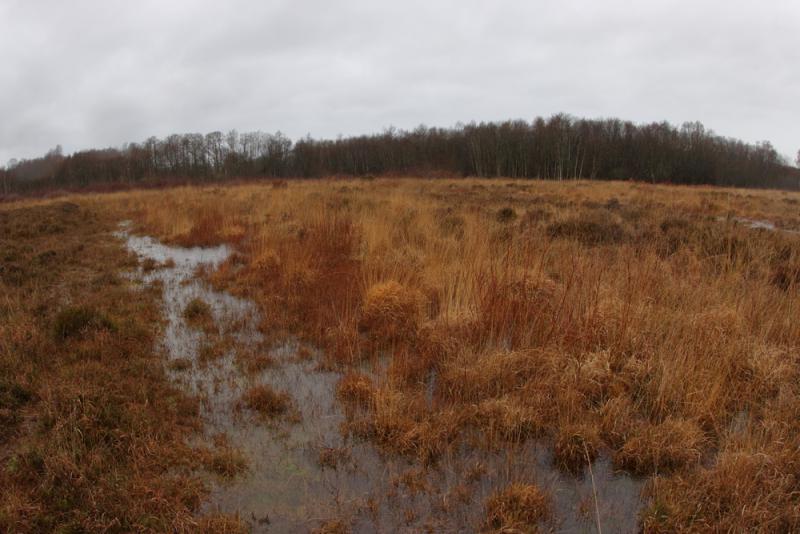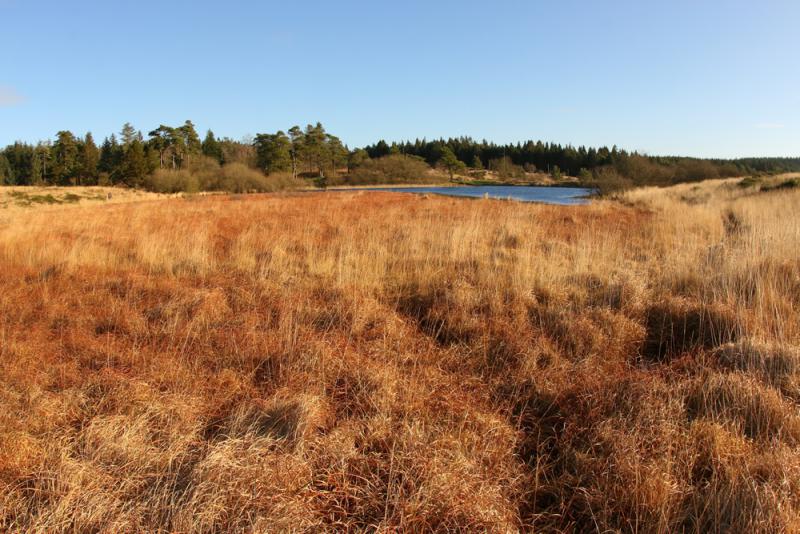
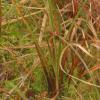
Eriophorum angustiflium (common cottongrass), see plant distribution map, although this plant does not occur at the moth's Wicken Fen site. Two specimens were bred from collected, dead stems of a Scirpus sp. (club rush) on a saltmarsh in Essex. It is suggested that the larvae may not necessarily have been feeding on this.
The larva overwinters within the stems.
The following additional notes (merged and edited) have been kindly supplied by Will Langdon (July 2022) following breeding several of this species in Britain:
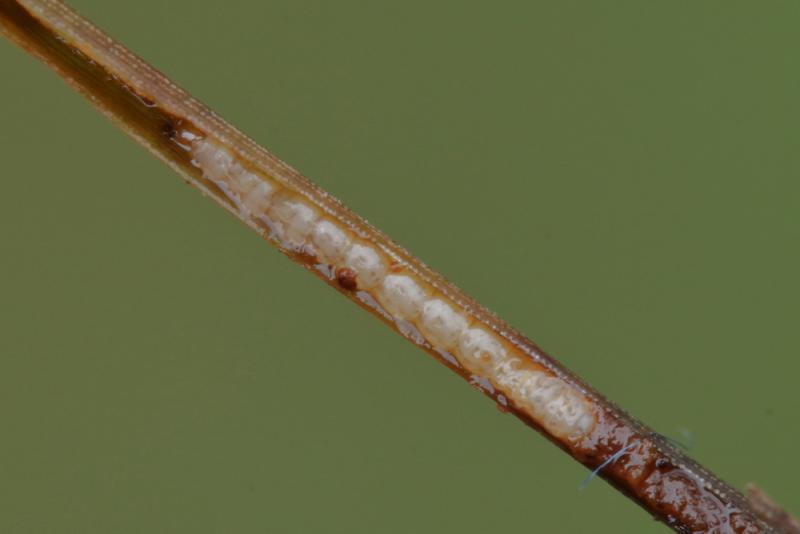
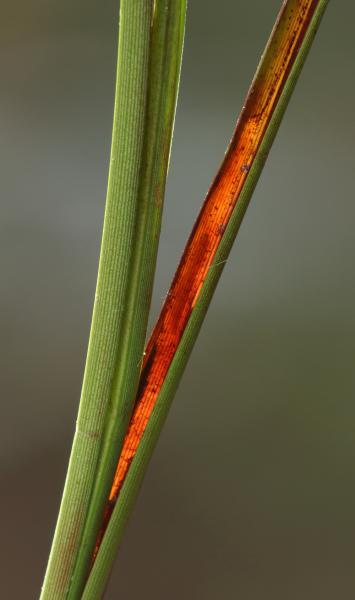
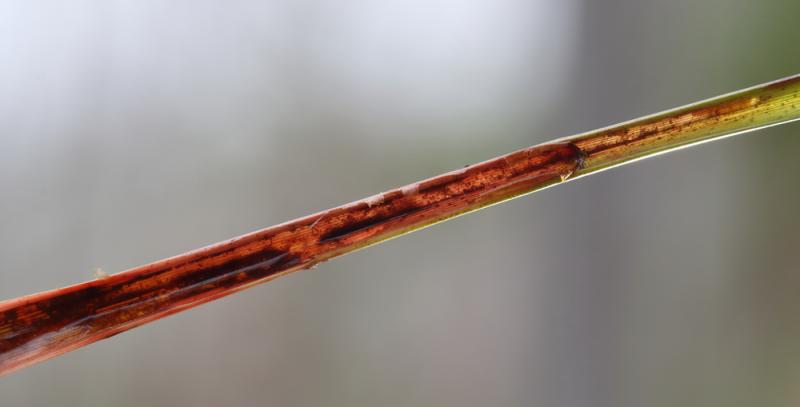
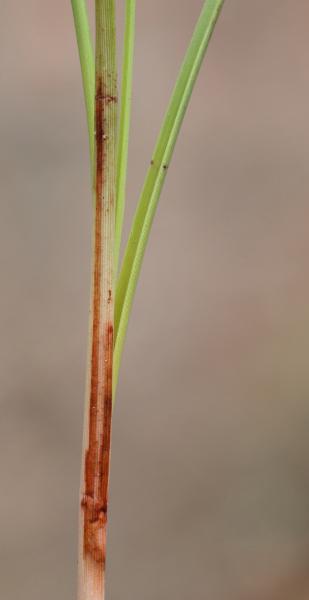
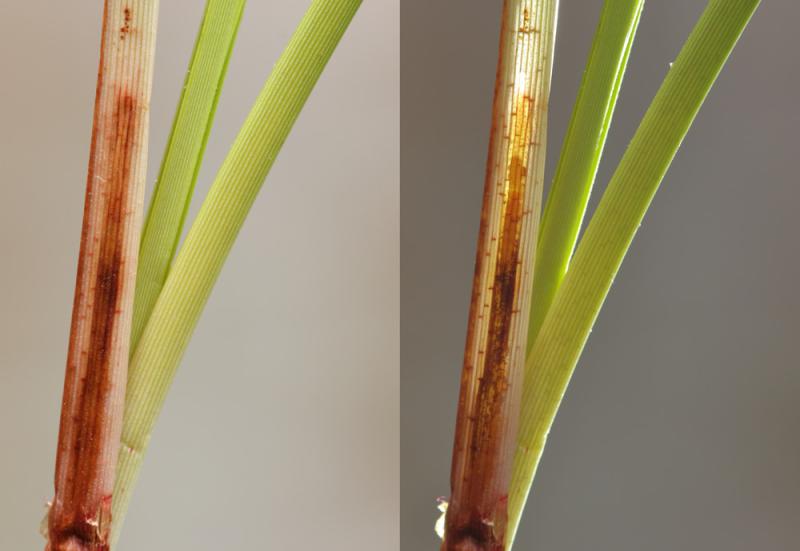
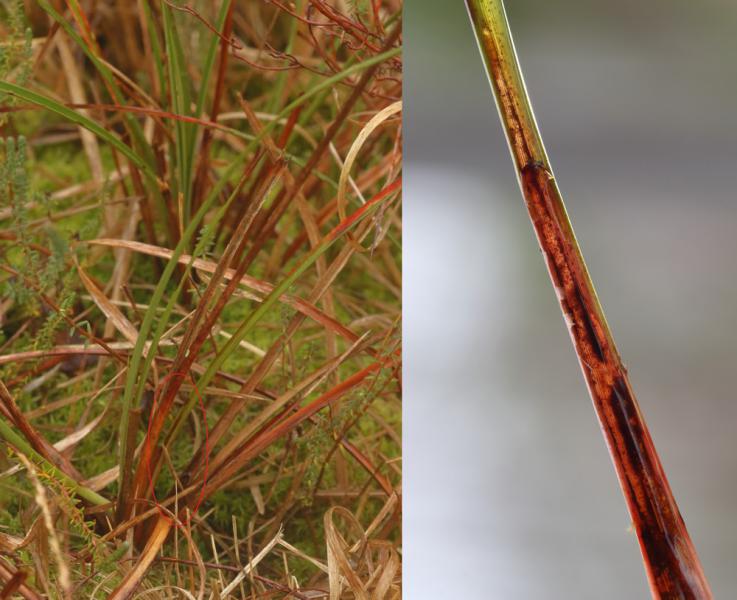
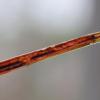
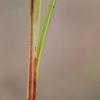
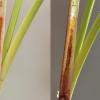
Feeding signs in March were exactly the same as in January and the larvae hadn't started feeding any higher up than the base of the leaves. When rearing the larvae they can construct long or shorter mines. Most plants had multiple (old) mined leaves, suggesting that larvae might be switching leaves, which did tally with what I saw in captivity. These old mined leaves turn brown and die very quickly, so they aren't particularly obvious in the field, I just noticed them when I got home and examined the plants carefully in good light. One plant contained two larvae. I wasn't able to find the pupae which weren't off the plant in the pot, so must have been either in the mine or inside the plant somewhere. At his early satge, most of the mine is in the paler base of the leaf (below the surface of the sphagnum moss the plant was growing in) and not visible.
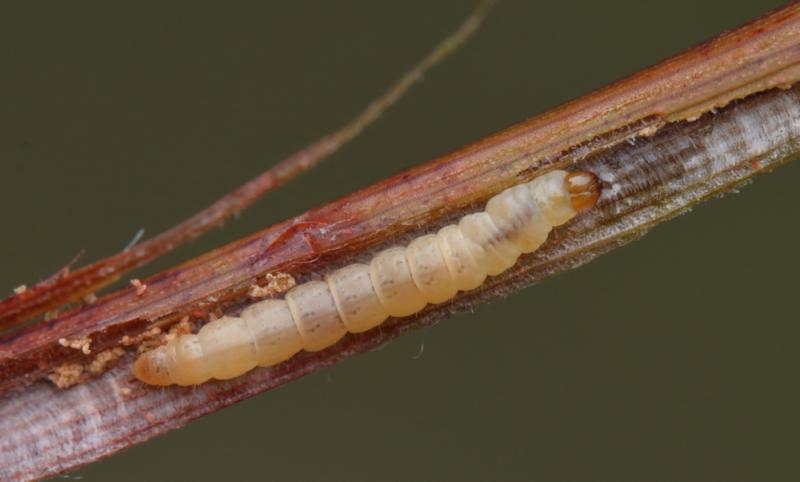
The larva has a pale brown head, a whitish body with a faint yellow tinge and a pitted texture. None of the larvae had a black lateral spot on thoracic segment one. This compares with one larva with this spot, found, and identified via DNA, in Lancashire. The presence or absence of the spot may therefore be instar-related.
Will Langdon pers. comm.

%20%20Co.%20Clare%20L%20Evans_0.jpg)