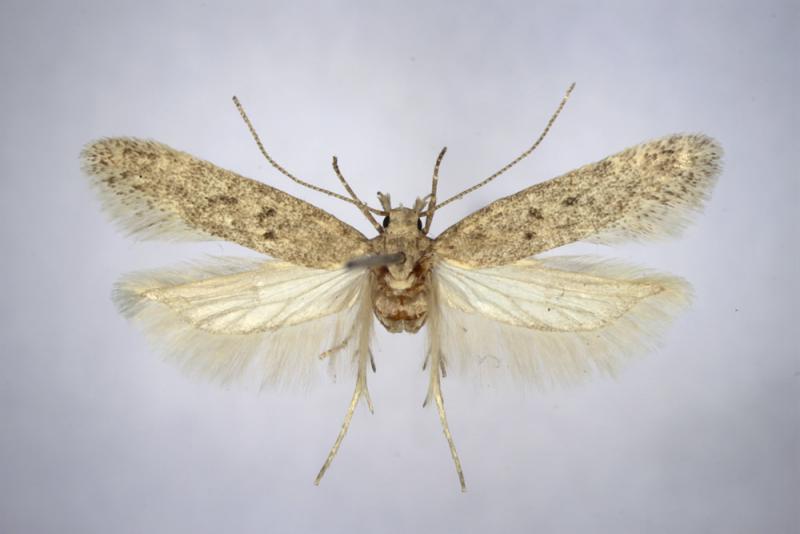
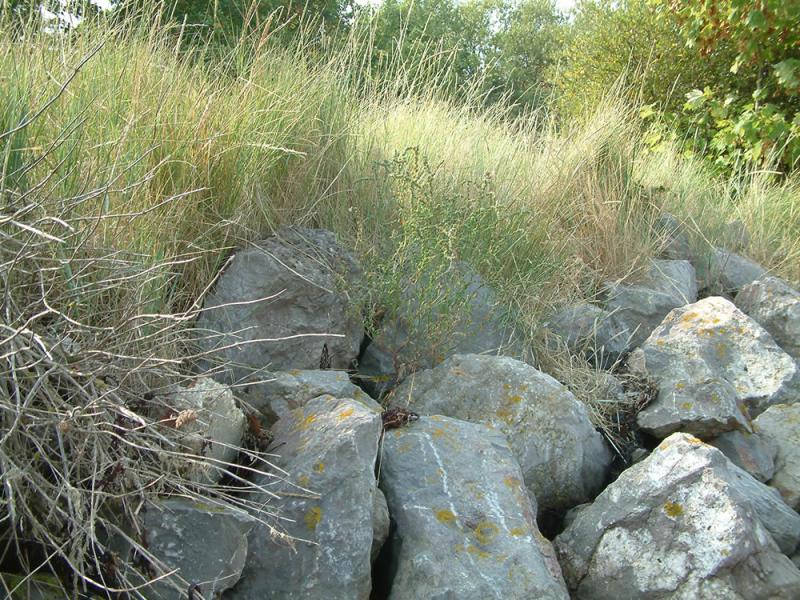
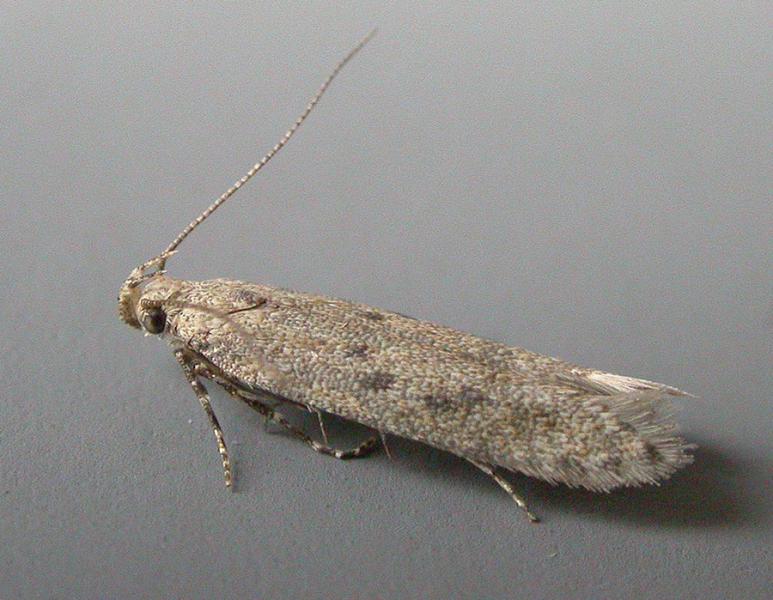
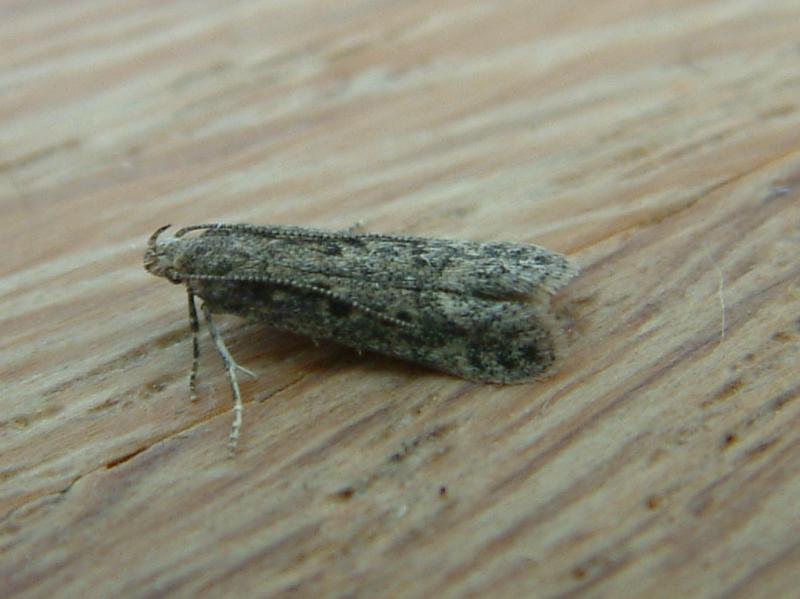
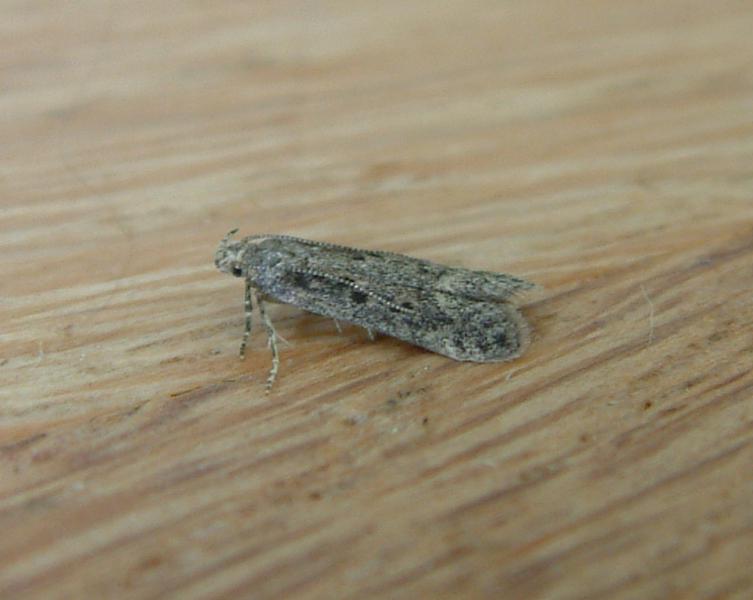
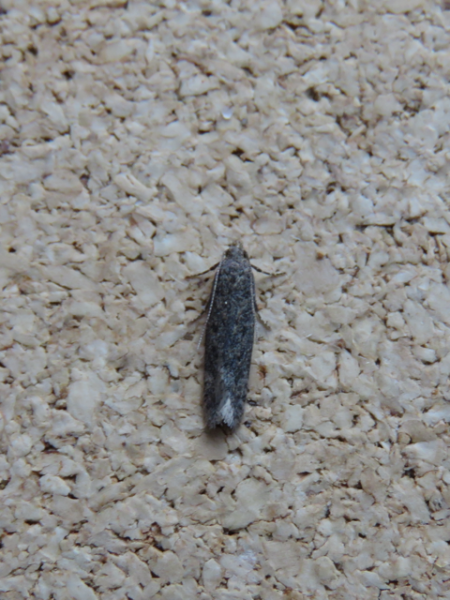
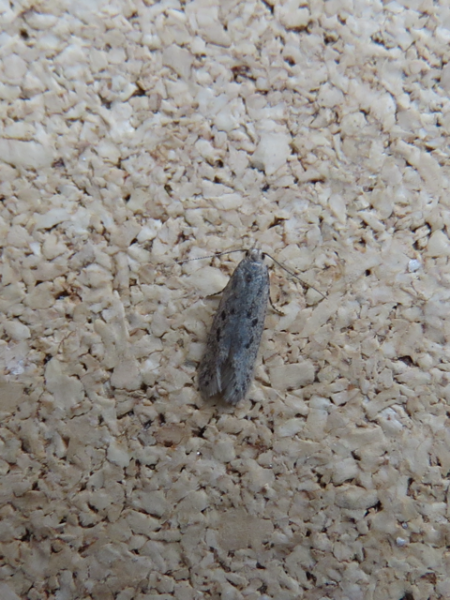
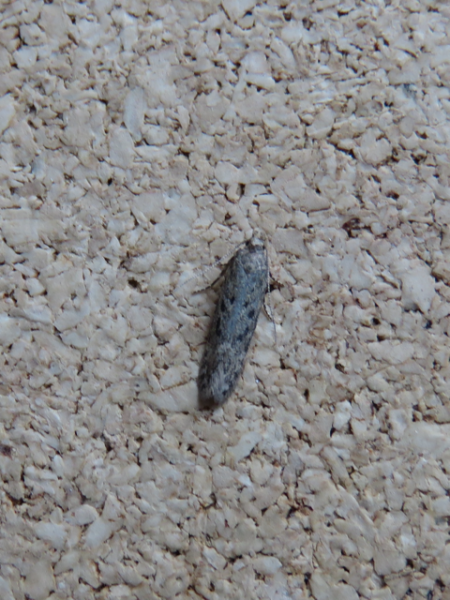
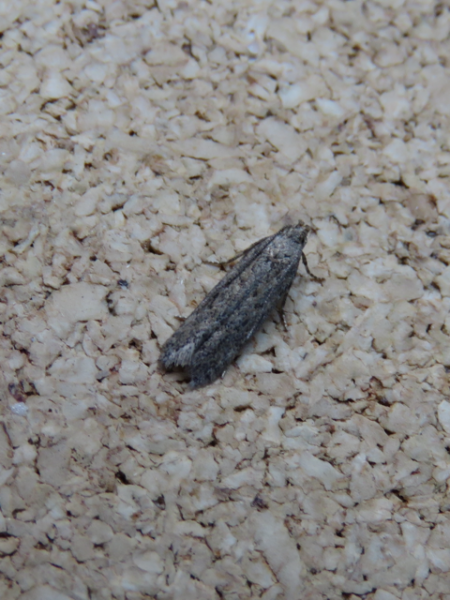
Can be the palest of the saltmarsh species and greyer than most, often lacking any sign of red-brown colouration on the wings. Similar species such as S. nitentella and S. atriplicella usually have more variegated forewing markings.
S. nitentella was only distinguished from S. obsoletella in Britain in 1935 and as a consequence there is some uncertainty as to the true identity of some of the older records.
Because of the sometimes considerable variation within saltmarsh-inhabiting Scrobipalpa species, identification by wing markings alone will often not be possible. Caution and care are the watchwords for this group.
If a moth has been bred from a known foodplant, and therefore also time of year when the larva feeds and the nature of its feeding methods have been observed, this information, plus a freshly emerged moth, will allow the number of possibilites to be reduced considerably. If the bred or caught moth is a very fresh specimen and displays the distinctive markings of some species (see below) then an identification without more detailed examination should be possible in many cases.
Those more readily identifiable when freshly emerged by the forewing markings are listed below. However all of these also have variation in their wing markings which, when the obvious features are obscured or worn, will then resemble some other Scrobipalpa species.
Scrobipalpa suaedella - those with an obvious clear pale ochreous dorsal quarter to the forewing.
Scrobipalpa obsoletella - those with the forewing a pale greyish colour lacking any red-brown colouration and sometimes appearing paler in the final one-third due to a pale postmedial fascia. This species usually has three distinct black spots on each forewing.
Scrobipalpa ocellatella - those with the prominent angled fascia at three quarters on the forewing and dark markings contrasting with the surrounding paler ground colour.
In cases where there is any doubt, particularly where worn light-trapped specimens are concerned, dissection will be essential to obtain an accurate identification until a good familiarity is built up with the range of species and their markings at a particular site.
Even genitalia differences are often small but are constant between the various species. It is advisable to seek confirmation of identifications by genitalia until familiarity is built up with this genus.

.JPG)